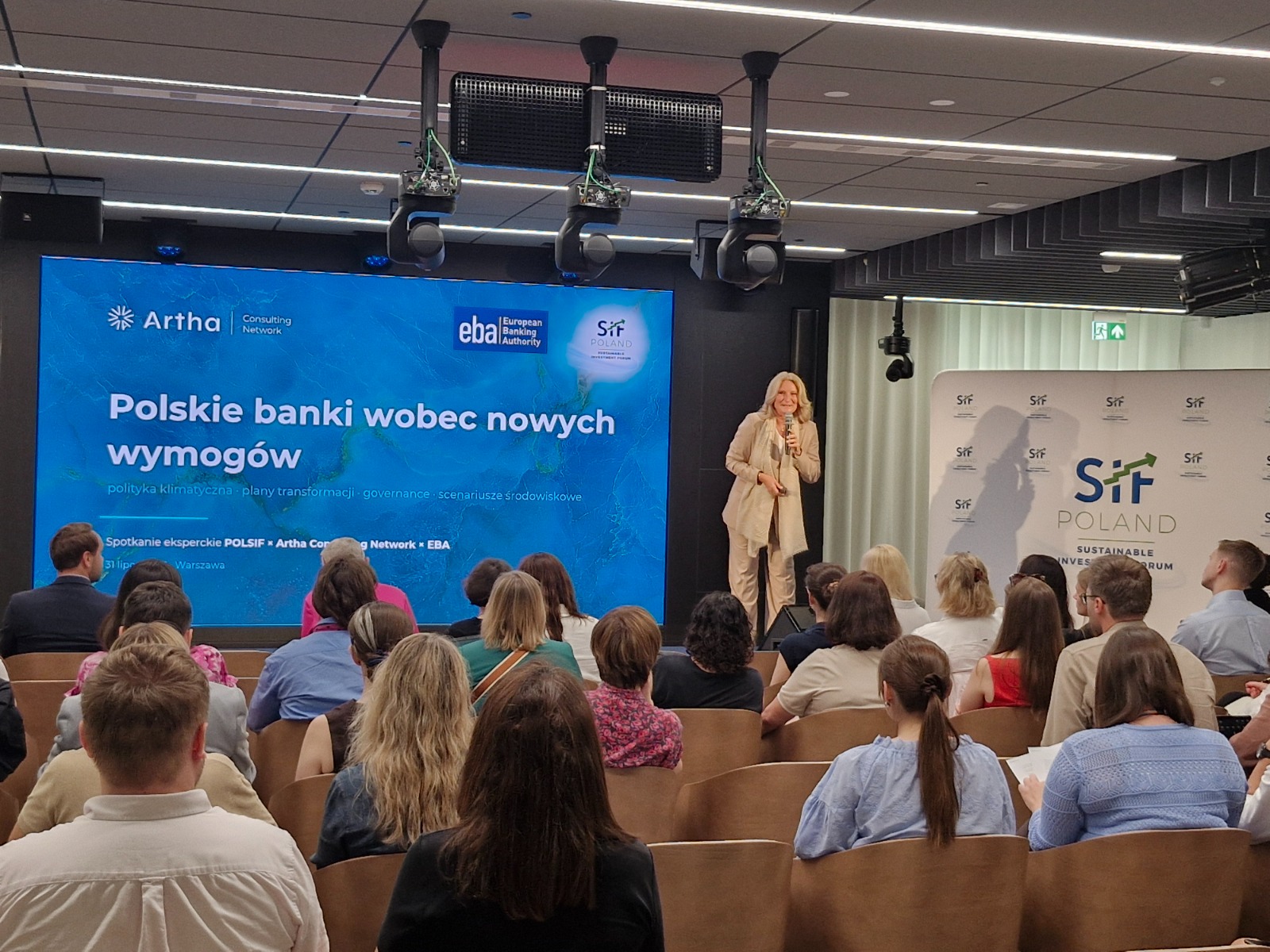
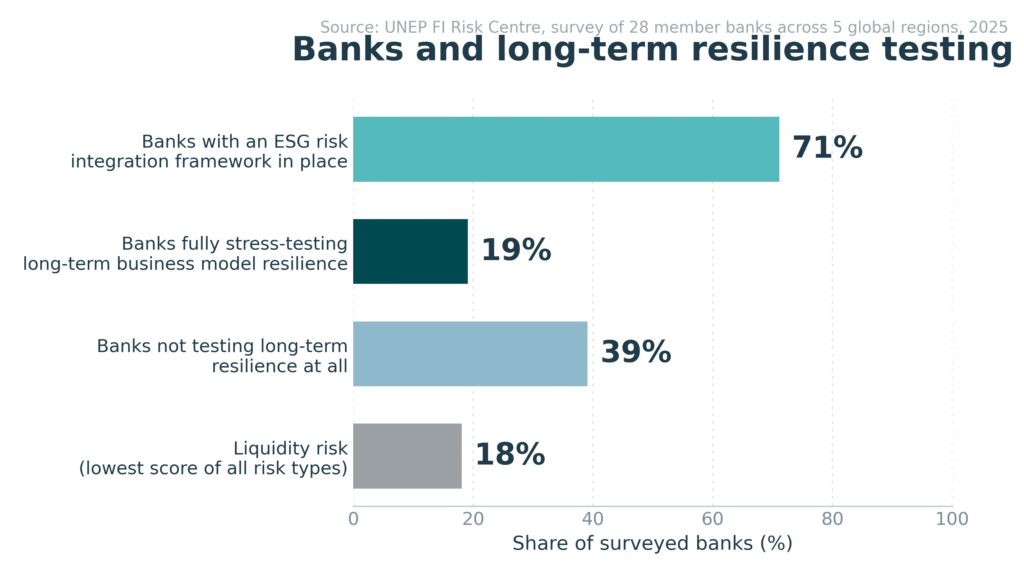
31 July 2026, Warsaw – Only 19% of banks worldwide fully stress-test the long-term resilience of their business model, even though 71% already have ESG risk integration frameworks in place (UNEP FI Risk Centre, 2026). This gap between declared readiness and actual practice was one of the central threads of today’s expert meeting, co-organised by Artha Consulting Network together with POLSIF and the European Banking Authority (EBA).
It was a precisely designed workshop that brought together the perspective of a regulator, a market practitioner and a strategic advisor – with one clear goal: to show the banking sector how to translate new EBA requirements from regulatory language into decisions for management boards and supervisory boards.
Why this meeting is an important case study
Poland’s banking sector currently stands at a point where regulation, market data and time pressure all converge. Since 11 January 2026, EBA/GL/2025/01 guidelines on the management of ESG risks have been in force, and from 1 January 2027, EBA/GL/2025/04 guidelines on environmental scenario analysis will take effect. At the same time, the supervisor has already moved from expectations to enforcement – the ECB has imposed its first sanctions on institutions for insufficient materiality assessment of climate risks, in amounts ranging from roughly EUR 190,000 to over EUR 7.5 million.
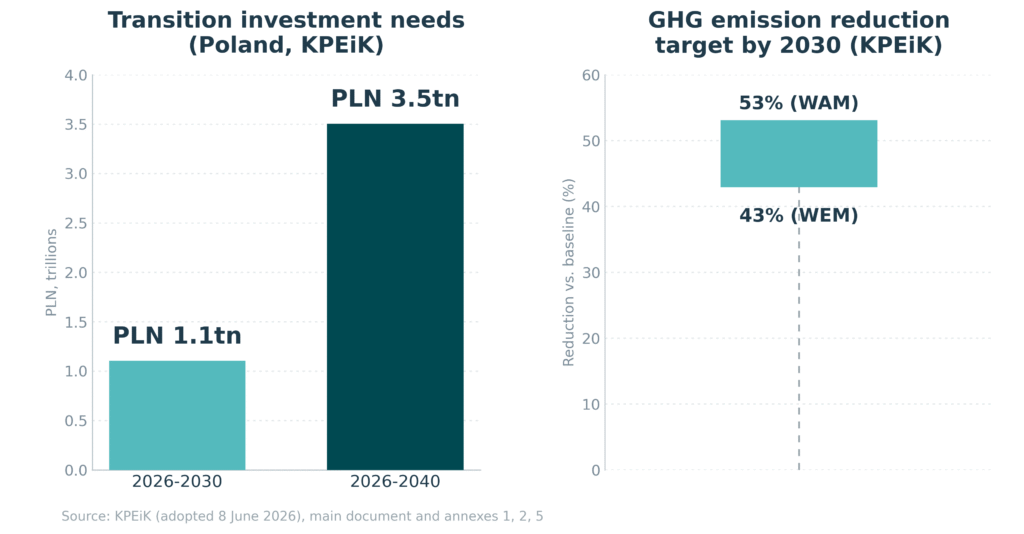
On top of this comes the national context: Poland’s National Energy and Climate Plan (KPEiK), adopted by the Council of Ministers on 8 June 2026, assumes a 43–53% reduction in greenhouse gas emissions by 2030 (within the WEM–WAM scenario range), with transition investment through 2040 estimated at around PLN 3.5 trillion. A significant share of this capital will have to flow through the banking sector – which means banks are simultaneously financing the transition, exposed to its risks, and in need of predictability in the form of a shared scenario language.
It is precisely at this intersection – of regulation, strategy and practice – that Artha Consulting Network builds its role as a partner to the financial sector.
Experts shaping the conversation on regulation
The meeting brought together EBA representatives directly responsible for shaping the guidelines under discussion – Kamil Liberadzki, Director of Economic & Risk Analysis, and Dorota Wojnar, Head of the ESG Risks Unit. The perspective of global case studies and good practice was contributed by David Carlin, founder of D.A. Carlin & Company. The advisory and sector-specific perspective was represented by the Artha team: Irena Pichola (CEO of Artha, President of the Responsible Business Forum, Chair of the Steering Committee of Chapter Zero Poland), dr Karolina Daszyńska-Żygadło, Maciej Orczyk and Aleksander Czarski.
This combination – a regulator, an international practitioner, and advisors with hands-on experience implementing these requirements for banks and supervisory boards in Poland – helped ground the discussion firmly in the question of “what does this mean for my bank on Monday morning.”
Four thematic modules – from macro context to the supervisory board
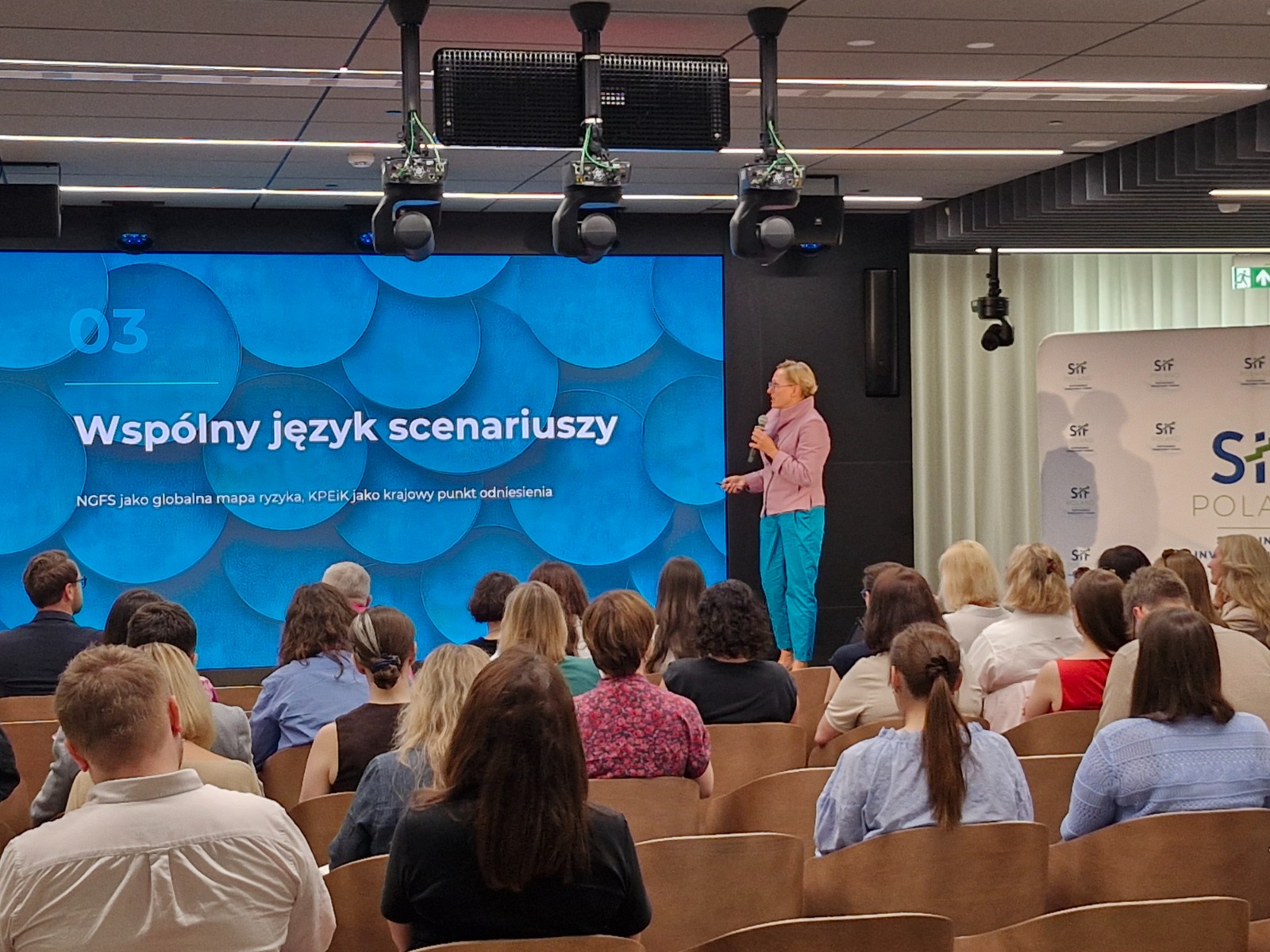
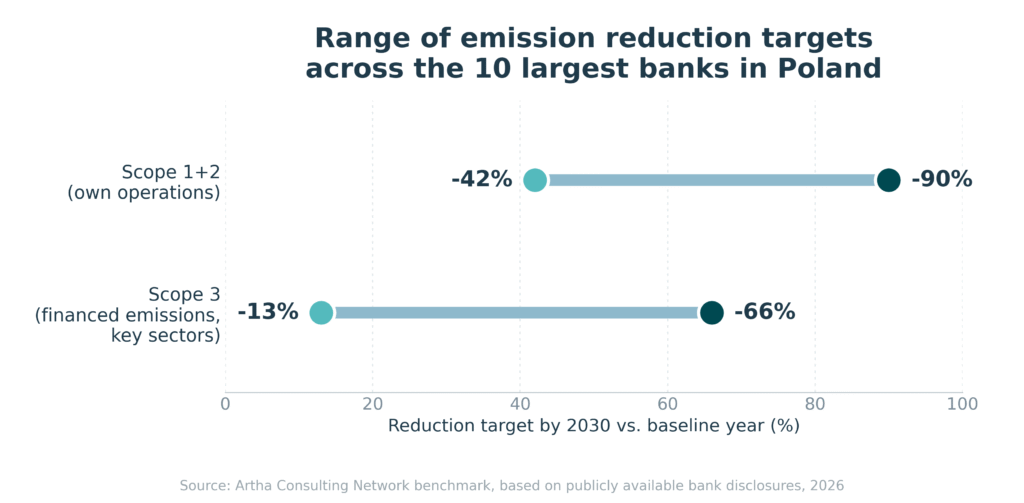
The meeting was structured around four thematic modules, taking participants from the high-level macroeconomic context all the way to concrete decisions within corporate bodies. While the agenda covered the broader market landscape, benchmark transition plans of Poland’s top ten banks, and board-level governance, the true core of the session was Module 3. This central module focused on building a shared scenario language, putting scenario planning front and center as participants explored how to operationalise NGFS and national scenarios (KPEiK) into actionable strategic decisions and robust bank risk models.
EBA‘s insight – Kamil Liberadzki and Dorota Wojnar
Kamil Liberadzki was direct about where climate risk now sits in the supervisory architecture:
A dedicated climate module will join the 2027 EU-wide resilience analysis – covering both transition and physical risk, run bottom-up, and mandatory for the largest banks.
Climate risk is not treated as a standalone category – it is a risk driver that banks must integrate into everyday risk management.
For management and supervisory boards, this is not a modelling footnote. Dorota Wojnar put it plainly – the Guidelines change the way corporate bodies work, not only what the bank reports:
The Guidelines introduce a permanent governance mechanism, not a one-off compliance exercise: a recurring review of whether the bank’s strategy still holds up against a changing environment.
Long-term decarbonisation targets are directional milestones, not hard risk limits – precisely because the long-term path is so uncertain.
Resilience analysis is the feedback loop that lets a board recalibrate those targets as the world moves – and under the new Guidelines, scenario narratives must be endorsed by senior management and reviewed regularly.
David Carlin’s seven good practices for climate resilience analysis
Bridging the methodology discussed in the modules above with the workshop that followed, David Carlin closed the thematic part of the meeting with seven good practices for climate resilience analysis, each illustrated with an example from international banking practice.
Specific & owned narratives. Institutions should adapt standard baseline scenarios – from regulators, NGFS, or scientific bodies – to reflect their own geographical and organisational context, as ANZ Bank has done.
Diversity of scenarios & time horizons. Risk modelling should incorporate multiple temperature pathways, varying policy assumptions, and both short- and long-term horizons, following HSBC’s approach of testing combined physical and transition risks across different warming levels.
Tailored sectoral & portfolio mapping. Risk assessment should balance exposure size, sector vulnerability and localised adaptive capacity, as UBS does when evaluating sector risks alongside regional mitigation capabilities.
Structured translation into financial impact. Scenarios need a clear, step-by-step mechanism for converting climate drivers into credit risk, financial performance and portfolio impact, illustrated by Mizuho’s approach.
Evaluating second-order effects. Analysis should move beyond direct, first-order impacts – such as physical storm damage – to capture indirect, compounding effects like rising insurance costs, supply chain shifts or carbon price cascades, as JPMorgan Chase does.
Challenging and updating strategy. Scenario insights should be used to test and refine existing transition plans, business strategies and sector lending policies, as NatWest has done in revising its energy sector criteria based on scenario outcomes.
Embedding into governance & action. Resilience findings need to be integrated into client risk ratings, portfolio steering limits, risk controls and assurance processes, following Standard Chartered’s end-to-end framework.
Taken together, these seven practices gave participants a checklist against which to measure their own institution’s maturity – and set up the transition into the afternoon’s hands-on exercise.
The “risk journey” workshop: a fictional bank, three scenarios, the year 2036
The workshop was designed and facilitated by the Artha team, which built the fictional bank, its portfolio and the scenario narratives, and then moderated the work of each group.
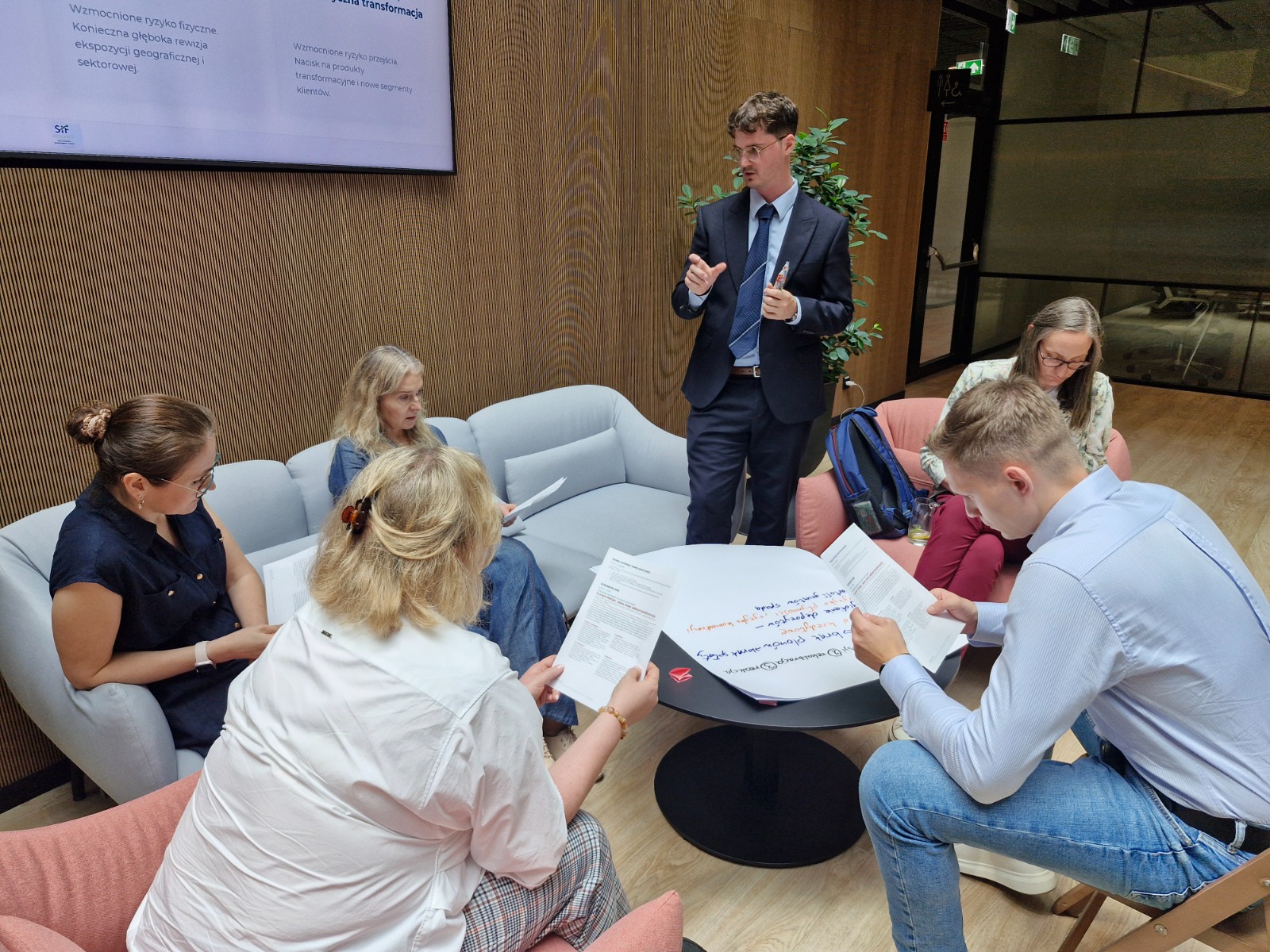
The thematic modules were followed by the “risk journey” workshop, where participants translated theory into concrete decisions. Working groups guided a fictional bank through seven steps of analysis: defining the bank’s profile and risk starting point, mapping risk transmission channels onto the loan portfolio, recalibrating risk assessments, and making strategic decisions in the face of a scenario reaching out to 2036.
Each group worked with one physical risk and one transition risk, seeing both pathways within its assigned scenario. The exercise closed with a plenary session comparing three versions of the same bank and portfolio – a reference scenario, a worst case for the climate (“hot house”), and a best case for the climate (a fast transition) – showing how differently each pathway forces a bank to act: shifting geographic and sector exposure, developing transition-finance products, redefining risk appetite.
Three conclusions cut across every group, regardless of the scenario it had been assigned:
- Environmental risk becomes financial risk quickly. The transmission mechanism stops being abstract the moment it is anchored in a specific portfolio.
- Monitoring and insurance are the beginning, not the end of the answer. In every group, the discussion ended up in limits, exposures and credit policy.
- The subject naturally travels up to the level of the bank’s corporate bodies. Participants themselves pointed to the supervisory board, the management board, risk and audit as parties to the process.
How this worked in practice was clearest in the two risk types each group had been given. On the physical side, drought and rising production costs hit the client first, and only from there reached the bank – as credit risk and pressure on liquidity. Physical risk changes the borrower’s ability to repay, and with it the role of the bank. The groups working on a portfolio strongly dependent on agriculture pointed to three responses:
- Client selection: limiting financing for clients without a credible adaptation pathway, while developing renewable-energy financing linked to agribusiness.
- Concentration management: exchanging information between banks around exposures covered by BGK guarantees, to avoid excessive risk concentration on the same clients.
- The bank as an advisor: helping the client navigate the national and EU support system, including explaining why adaptation is needed in the first place.
“Agriculture cannot simply stop being financed; the bank should help the client find the right support instruments rather than confining itself to selling its own product.” – a workshop participant, group working on a portfolio strongly dependent on agriculture
Transition risk worked through a different channel: collateral. New energy-efficiency requirements and flood risk hit collateral values, changing the economics of entire portfolio segments rather than of individual loans – so the bank answers by reshaping the structure of its portfolio. Here participants indicated:
- Risk limit: introducing a limit in the risk appetite framework for real estate with low energy efficiency.
- Reduction and selectivity: cutting exposure to developers, together with greater selectivity in insurance and collateral policy.
- New products: developing transition products and preferential financing for modernisation.
Above the level of individual portfolio decisions, the exercise showed what a well-designed scenario workshop does for the strategic conversation between the management board and the supervisory board – it translates a range of possible futures into questions that matter at board level:
- A shared picture of possible futures: both bodies work on the same assumptions and in a common risk language.
- A resilience test of key strategic assumptions: scenarios show where the business model holds up and where it calls for an earlier response.
- A translation of discussion into decisions: the conversation leads to concrete questions about risk appetite, portfolio, priorities and control points.
The greatest value appears when scenarios are referred to the bank’s own business model and to the decisions for which the management board and the supervisory board are accountable.
It was precisely this format – working through a concrete, if fictional, bank rather than an abstract discussion of methodologies – that meant participants left the meeting with a ready-made framework they can bring into their own institution starting Monday.
Artha at the intersection of regulation, data and board-level decisions
The POLSIF × Artha × EBA meeting reflects the broader role Artha Consulting Network plays in the market: a bridge between the regulator, hard market data, and the decisions made at management board and supervisory board level. This is an approach that combines regulatory experience (cooperation with the EBA, involvement in shaping the discussion on guideline implementation), sector expertise, and an educational track record (supervisory board training, strategic workshops for management boards).
For the banking sector, this means one thing: the new EBA requirements don’t have to be implemented blindly. They can be translated into a concrete, structured process – from a readiness diagnosis, through building a scenario narrative, to a business-model resilience analysis and the engagement of corporate bodies – and that is exactly the path Artha helps banks walk.